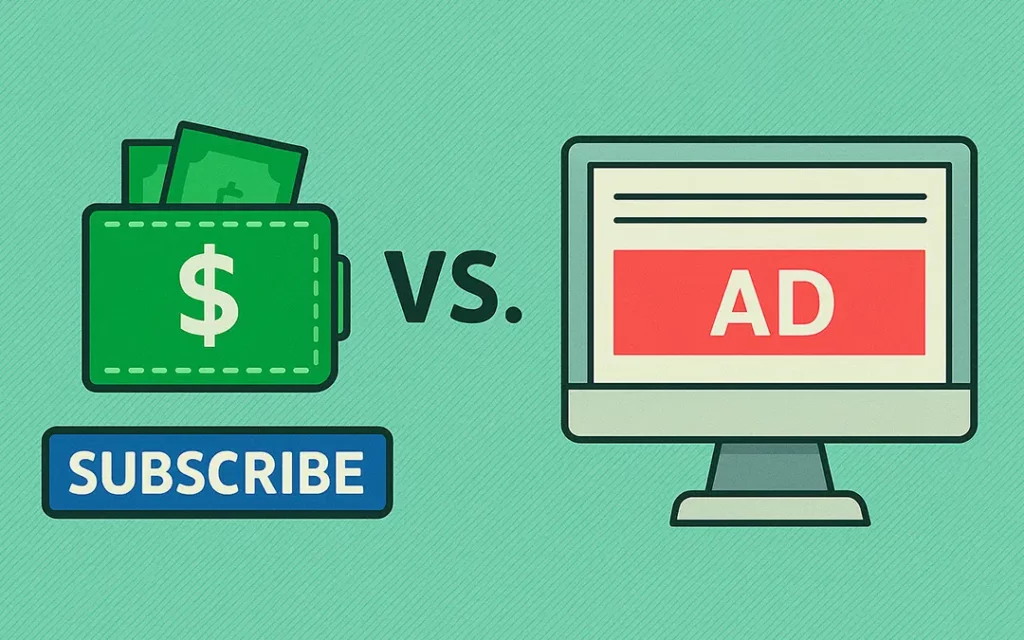
Have you ever been deep into reading an article or watching a video online, completely immersed - only to be rudely interrupted by a random ad trying to sell you shoes you already bought last week? Or maybe it’s the tenth time today you've seen that ad for a miracle hair-loss shampoo - despite your luscious locks. Or perhaps it's that ridiculously cheerful commercial promising weight loss by eating chocolate cake three times a day. Yeah, we've all been there, tapping furiously on the "skip ad" button like our sanity depended on it, or mentally rehearsing stern words we'd share with whoever thought that ad was a good idea.
Yet, for many digital businesses, ads aren't just annoyances - they’re lifelines. They pay the bills, keep services free, and let startups scale quickly. But let's be honest: relying solely on ad revenue isn't always as great as it sounds. And that brings us to an important question for senior IT leaders: Could subscription models be the smarter move?
Ads: Easy Money, Big Problems
Ad-supported models seem straightforward and appealing at first glance. After all, who doesn't love "free" content? Ads allow businesses to quickly attract large audiences, turning page views and clicks into immediate revenue. This makes them highly tempting, especially for startups or new platforms eager for rapid growth.
However, there's a hidden cost to this seemingly easy path - user experience. Every interruption, delayed load, or invasive ad can irritate users, potentially driving them away permanently. A report by HubSpot highlights how even minor delays or disruptions significantly increase bounce rates, underscoring the fragility of user engagement in ad-heavy environments.
Even more problematic is the deeper, troubling issue of user privacy. Ad-supported platforms depend heavily on extensive tracking of users' digital activities - browsing history, location data, social connections, and purchase preferences. These highly personalized ads often cross from helpful to invasive, severely damaging user trust. According to a 2019 Pew Research Center study titled "Americans and Privacy: Concerned, Confused and Feeling Lack of Control Over Their Personal Information", around 79% of Americans report being concerned about how companies use the data they collect about them. This finding highlights the widespread discomfort users feel regarding aggressive data collection and the lack of transparency in how personal information is handled.
Insights from experts like Enrique Dans consistently highlight growing user frustration towards invasive tracking practices, which has serious implications for brands. When ads are overly intrusive, brands don't just risk annoying users - they risk long-term damage to their reputation. A study by Nielsen found that poorly targeted or intrusive ads can significantly reduce consumer trust and brand perception, translating into real business losses.
Moreover, aggressive advertising tactics can negatively impact brand equity. A brand associated with intrusive ads or privacy violations faces higher chances of backlash on social media platforms, triggering negative publicity and potentially viral criticisms. For instance, in 2021, Facebook (now Meta) faced intense criticism for privacy violations linked to targeted advertising. The controversy gained global attention after revelations from whistleblower Frances Haugen and the release of internal documents known as the "Facebook Papers". These disclosures detailed how the platform prioritized engagement over safety, allowed misleading political ads, and failed to act decisively on harmful content. The backlash significantly harmed Facebook’s public image, triggered multiple government investigations, and caused many users to reconsider their engagement with the platform.
For brands, these are not minor inconveniences - they represent real threats to sustainable growth. The immediate financial appeal of ads comes at a steep cost, including compromised user experiences, privacy erosion, diminished brand trust, and deteriorating customer relationships. Brands must carefully balance short-term revenue gains against the long-term risk to their reputation and consumer loyalty.
The Subscription Alternative: Building Trust and Sustainability
So, is the subscription model the knight in shining armor here? Maybe. Done right, subscriptions create a sustainable, predictable revenue stream, which not only eases financial planning but also empowers businesses to make confident, long-term investments in innovation, product improvements, and enhanced user experience. With subscriptions, you're no longer chasing short-term ad revenues or trying to keep advertisers happy; instead, your priority becomes your customers' satisfaction and loyalty.
When a user subscribes, they’re essentially voting with their wallets, clearly indicating they find genuine value in your offering. This direct alignment of interests creates a healthy cycle: companies prioritize improving their products and services because the revenue depends directly on user satisfaction. In turn, users feel valued and appreciated, strengthening their trust and loyalty towards the brand.
Duolingo offers a great example of this shift. Initially ad-dependent, Duolingo successfully transitioned to subscriptions by providing an ad-free premium experience. This move significantly improved user engagement, strengthened brand loyalty, and increased revenue stability, enabling continuous innovation. Over 75% of their revenue now comes from subscriptions, showing the scalability and reliability of the model.
Similarly, Medium switched from ads to subscriptions, resulting in higher-quality content and better reader satisfaction. This shift directly linked content quality to readership, not clicks, improving both community engagement and trust among users.
Another compelling, yet less widely cited case is that of the financial wellness platform YNAB (You Need A Budget). YNAB transitioned from a one-time software purchase to a subscription model, focusing entirely on user success and long-term value. Rather than packing in superficial features or gimmicks, YNAB built a loyal base by prioritizing transparency, education, and frequent product improvements. The subscription not only supports financial sustainability but fosters a genuine relationship with its users, evidenced by its high retention and word-of-mouth growth.
Even in niche B2B environments, subscription success stories are emerging. Consider Figma, the collaborative design tool. Figma didn’t just rely on its freemium model to gain adoption; it used subscriptions to build deep engagement and monetization around teams that found long-term value. The platform’s enterprise-level growth and strategic acquisition by Adobe for $20B illustrate how trust and steady revenue from subscriptions can drive monumental valuation.
From SaaS to content, from consumer apps to professional tools, subscription models are being used to realign incentives between users and companies. They encourage a quality-over-quantity approach, as brands are rewarded not for clicks or impressions, but for continuous value creation and meaningful relationships.
What stands out in all these examples is the same underlying principle: trust. Subscriptions thrive when users believe they’re getting consistent, tangible value - and when they feel respected in how their time, data, and money are handled. It’s not just a pricing model; it’s a strategy for sustainable, user-centered growth.
The Subscription Model: Challenges and Creative Solutions
However, subscriptions aren’t without challenges. Paying upfront can be a psychological hurdle for many users, even if the cost is minimal compared to daily trivialities. Subscription fatigue, with users managing numerous services simultaneously, is a growing issue. Users now scrutinize subscription value more closely, determining which subscriptions genuinely enhance their lives versus merely adding clutter.
This has led companies to experiment creatively with hybrid models combining subscriptions and ads. Spotify and YouTube exemplify this balanced approach, allowing users to choose between ad-supported free content or premium, ad-free subscriptions. Lesser-known but successful examples include apps like Pocket, which started with ads and transitioned gradually to subscriptions by adding valuable premium features, ensuring a smooth user transition.
Ultimately, choosing a subscription model requires thoughtful planning, clear value communication, and continuous commitment to user-centric development. Success comes not from quickly flipping a switch, but from strategically nurturing user trust, value, and steady improvement.
Subscriptions, when thoughtfully implemented, offer an excellent opportunity to build deeper customer relationships, ensuring long-term loyalty, sustainable growth, and ongoing innovation.